

Huodongxing's First Industry Ecosystem Summit Roundtable: How Offline Events Capture Users
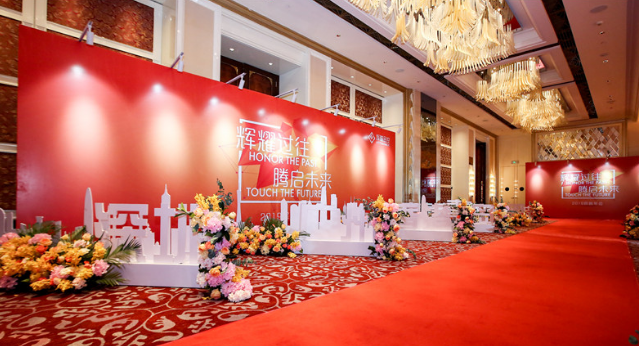
The "Create - Huodongxing First Industry Ecosystem Summit," hosted by Huodongxing, concluded successfully on March 31 at the Hyatt Regency Beijing Wangjing. The event featured 15 industry ecosystem service providers at exhibition booths, 17 speakers delivering 20-minute talks, and 100 VIP attendees at a social dinner.
Below are highlights from the afternoon roundtable discussion:
Moderator: Xie Yaohui, Founder and CEO of Huodongxing
Panelists: Li Han, Partner at Jiemodui; Jiang Jie, Founder of Huanjing; Ma Peifen, Marketing Operations Director at B'in Creation; Li Tienan, Marketing Director at Newrank
Xie Yaohui: I believe a roundtable is just an impromptu chat. So first, let each of you introduce yourself in one to two minutes.
Li Han: I'm Li Han from Jiemodui. We are a media outlet focused on the education industry. Since our founding in 2014, we have been committed to original content for five years, using technology to drive products and education teams and companies. Every year-end, we hold an Education Technology Conference in Beijing, which has been successfully held four times. We aim to create educational technology products and connect domestic and international, formal and informal, and upstream and downstream players in the industry. Thank you!
Jiang Jie: I'm Jiang Jie, and I've been in immersive entertainment for about four years. Before that, I worked in film and television for 12 years. The market wasn't great then; even some Hollywood companies went bankrupt. My film company was acquired by a Hollywood company, and then I moved into immersive entertainment. We provide complete solutions for commercial real estate and scenic areas. That's what we do.
Ma Peifen: I'm Ma Peifen from B'in Creation. B'in Creation is a Taiwanese company specializing in music performances. Besides large-scale concert equipment, we've also been developing new content in recent years. So in addition to Barbie events, we also organize music festivals, immersive theaters, and many cross-disciplinary art performances. We're creating new content. Thank you.
Li Tienan: Newrank was founded in September 2014. We are a service platform for the content industry, mainly serving content creators. Content creators might be unfamiliar to you, but they work on WeChat, Weibo, Douyin, Kuaishou, Toutiao. We provide data, rankings, ad trading, follower growth, data consulting, and a range of services. Every year-end, we hold the Newrank Conference for the new media industry, and we've done five so far.
Xie Yaohui: Li Han and Tienan organize conferences, while Jiang Jie and Ma Peifen run IP-based immersive and experiential exhibitions. Could each of you share when you started organizing events and how you got involved? Also, during the process, what are the most troubling issues or pain points? As event curators, you must have encountered many problems. What do you think are the current hurdles?
Li Han: In 2010, there was the Shanghai World Expo. At that time, I was still in the tech industry, not education. I started with brand promotion, and events have always interested me, so I began. As an industry media, many of our events target small B-end, i.e., education practitioners, and the value is also reflected in output to enterprises. We've tried to use conferences to drive industry development. Because we are media, we naturally have an opinion leader identity in communication and promotion.
For us, the biggest problem comes from venue limitations. If you want to hold an event with over a thousand people in Beijing, the first issue is approval. And often, we organize events ourselves (note: as opposed to outsourcing to PR companies). Regarding the venue, sometimes we want to expand due to attendee numbers, but the venue is just that size.
So we have to do a clearer split and operation under existing resources and circumstances, making the value granularity smaller and smaller. That's some of our practices and considerations.
Xie Yaohui: Does Newrank have this problem of insufficient venue space?
Li Tienan: In Beijing, last year's Newrank Conference was at Kerry Centre, and the year before at Hyatt, also on January 8-9, 2019. The venue was okay for us. It seated 1,200 people. We mainly spread through online channels, so the venue wasn't a big issue for me.
Xie Yaohui: Then what bothers you more in events?
Li Tienan: I don't know if you've noticed, but at the beginning of new media, everyone was doing WeChat official accounts. Especially after 2018, Douyin and Kuaishou grew rapidly, and now more people are doing short videos. Another obvious feature is that new media monetization is through advertising, e-commerce, and knowledge payment. Many top new media accounts have evolved into increasingly complex forms. They might open offline bookstores or make more connections.
The current confusion is how to break through the current circle and reach more people. Originally, through traditional media, you had to spend a lot on channel fees. Now with own traffic, it connects many services. My current coverage is only within the new media industry. I can only cover some through connections or cooperation with other channels. That's a bit challenging at the moment.
Xie Yaohui: Jiang Jie and Ma Peifen can respond. Venue is unavoidable, but like Tienan, are there other pain points?
Ma Peifen: Because most of our past events were held in Taiwan, we didn't have many venue approval issues. As such operators, the biggest problem we face in mainland China is venue approval and implementation.
From our experience with Barbie events, if we do a road run, approval requires 3,000 to 5,000 people, and the process is quite cumbersome.
Jiang Jie: Given our business nature, we are more B2B and B2G. B2G means government bulk procurement.
Regarding venues, B2G is basically no problem. For corporate business, there are two dimensions. For immersive experiences, the smallest is a one-person theater, one actor to one audience, which has almost no restrictions. Another issue is the nature of land, which is not convenient to elaborate on now.
Xie Yaohui: Where do you pay the most attention to details in events, or have you seen others do details particularly well?
Li Han: When we first started industry events, we charged high ticket prices. But most C-end users rarely buy tickets; many are corporate bulk purchases to invite employees. At that time, there was a problem: attendance was very low at the opening of the morning and afternoon sessions, and by lunchtime, almost no one was there.
Although we saw thousands of registrations in the backend, only a few hundred actually attended.
Why did this happen? Chatting with friends, many people treat the event as a half-day outing. They want to go shopping at nearby malls. That's our value.
So Mr. Jiang said that events should have a sense of showing off (note: from the afternoon sharing). After cooperating with photography and booth setup agencies, we not only put logos on the event but also on photos, so you can post on your Moments, whether for yourself or friends to see.
Jiang Jie: In design, we have a philosophy: many people treat event planning and design as a one-time thing. For example, for touring exhibitions, the organizer leaves after the city event and doesn't care anymore.
But we do cultural tourism; a scenic area can't do one-time business. We have to consider word-of-mouth and promotion. So when designing, we also turn the follow-up experience of immersive experiences into online. The end of the experience is not the end.
Ma Peifen: Let me share something interesting. When we did the Barbie road run in Taipei the first year, we found 20 tall, muscular young men as assistant coaches.
At that time, we thought women attending Barbie events needed special treatment. They hoped to receive enthusiastic service at the scene, so we recruited 20 high-quality fitness coaches as running buddies. We found a bunch of kids crying because moms were queuing to take photos with the coaches.
The second year, because some moms complained that the fitness coaches wore too little, we had them wear more clothes. But then moms complained, saying they came because the coaches wore less, and now they wore more.
When doing events, you must ask what consumers think. Every small detail can become a wonderful experience for her. Even if the coaches you find are just a backdrop, it's a very successful part of the event for consumers. In our photo sharing, 5,000 consumers attended, but our photos were shared 20,000 times. Because all the shares were of these young men's photos, which is the most special part of the event.
Li Tienan: We usually do industry events for industry practitioners. So we do wheel-style speeches. When inviting speakers, we need to give a sense of substance, and the speakers' talks must be good.
For good speaker talks, there are two screening criteria. Content should be more informative. From the on-site reception, we need an empty-cup mindset, looking at problems from a novice's perspective. Because many things we take for granted might seem unreasonable or have poor experience for the audience. After each event, we do a survey and regularly review the comments. We've made an event execution manual that we keep adding to. This way, we can gradually discard what's not good and continuously accumulate better practices.
For example, for large venue events, we raise the stage and PPT higher for better audience experience. Also, we cleverly control the speakers' on-stage movement. Because the stage is raised, speakers can only go up and down from the side, so one person can manage it.
(Note: The floor was opened for audience questions)
Audience question: I'm from a German consulting company. We hold an annual China-Germany "Belt and Road" conference. The biggest problem I feel is that many speakers are officials, and their content is particularly boring for foreign guests. I'd like to ask the panel: how do you communicate with such speakers? Are there ways to give them good suggestions or even write better speech content?
Ma Peifen: You should give the speakers some training. Before the event, you can communicate with them.
Li Tienan: I've attended such events myself. Indeed, you don't have many options. You can only arrange their time well and try to control the content more. Control the outline and theme more finely, familiarize them with the venue in advance, and do rehearsals.
Xie Yaohui: Having done many events, let me share my personal experience.
Before a speaker's talk, set the outline and content. Officials probably won't write it themselves; they'll have someone write it. So just get that person, the one who writes for them. Give them a template to make it easier. Then help polish it, because officials are usually busy. If the material is complete, give them an outline and communicate in advance. That's what you can do. The final result is up to fate; you must do your best.
Xie Yaohui: The last question for a perfect summary of today's roundtable. Everyone who organizes events faces the issue of money. I ask each organizer: where does the money come from? Are there any tips to quickly get sponsorship and gain recognition?
Li Han: The key is the quality of the event. For events, I summarize in eight words: follow the trend and leverage strength.
When your capability is small, you must find those stronger than you and cooperate with them. Because if you can't do the event well yourself, you won't have confidence asking others for money.
You need to build the event's value. Treat the event as if it's for your friends or sponsors. A single blade of grass sells for 50 cents, but tied into a bundle to bind crabs, it sells for 200 yuan. Throughout the sponsorship process, learn to think from the other's perspective, similar to the concept of persona.
If you're doing execution, think about what the process is when they report to their leaders. It's not about intimate service; it's about tailoring to each enterprise.
Jiang Jie: From a money perspective, our company does B2B services, and we charge the client for projects. That's part of our sales funnel, a normal step.
But there's a basic principle: before the client's scenic area operator decides, we must have everything ready except money. This is a crucial factor in negotiation and sincerity. It includes financial calculations, and if the event requires IP, the IP revenue share, and many details that need to be discussed. Only when you reach that level can you get the money.

How to Plan a Successful Immersive Themed Exhibition?

How to Customize Event Plans for Clients?

How to Uncover a Unique Brand Story?

Marketing Event Planning and Execution Guide

Fun Christmas Interactive Activities for Your Team

Fireworks Installation Design Guide

How to Better Understand Target Customer Needs for Community Marketing?

A Practical Guide to Offline Community Marketing Events for Real Estate

How to Optimize Roadshow Effectiveness Based on Venue Layout
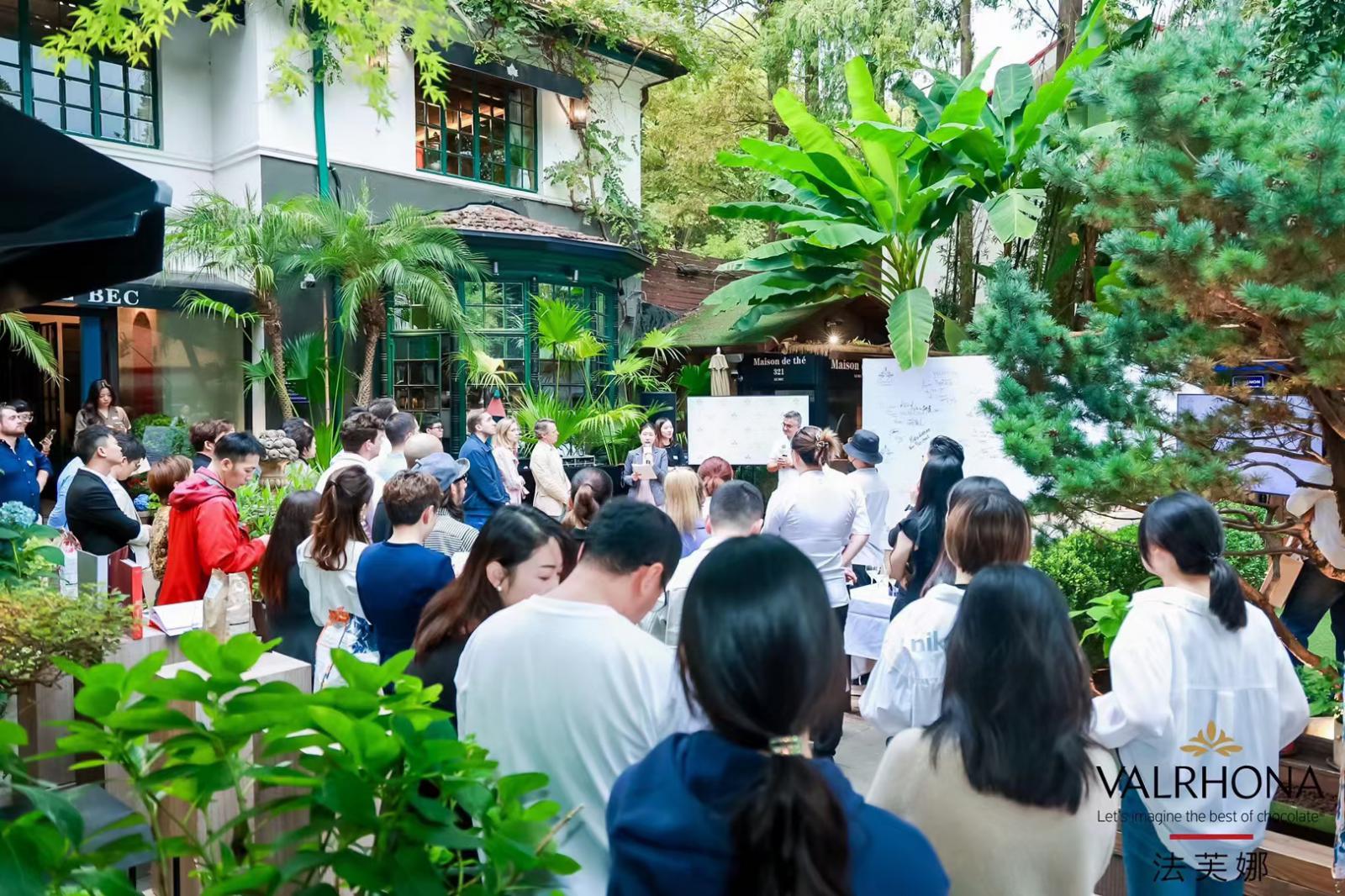
How to Choose a Non-Traditional Venue for Your Salon Meeting?
TOWIN News