

The Development and Application of Beam Moving Heads in Performances: A Case Study of Eurovision
.jpg)
Currently, moving head lights are generally divided into three functional types: spot, wash, and beam. Each type has its strengths, and together they create the art of light and shadow on stage.
Before beam lights emerged, moving heads consisted of spot and wash lights. Spot lights, which can focus and project patterns, are the most common type, offering powerful features that create soft, clear, and colorful scenes, often used in narrative performances. Wash lights, which can change color but lack pattern focusing, are also common.
Beam lights appeared later than spots and washes. However, their functions were already conceived in the scanner era (1990s), such as simple color-changing lights without lenses (equivalent to washes) and scanner lights with focusing lenses and scanning mirrors (equivalent to spots). Some even replaced scanning mirrors with prisms to achieve stronger beams.
Due to the limitations of scanners, moving heads quickly took over the market, with VARI*LITE widely recognized as the first manufacturer of moving head lights. The Spot+Wash pattern persisted for a long time. In 2008, some manufacturers began using 1500 W Osram Lok-it system light sources and Philips Fast-fit lamps. The lens at the lamp head differed from both the Fresnel lens of washes and the convex lens of spots, using a thin acrylic lens with fine threads. This lens, combined with the high brightness of the new light source, produced a relatively uniform light column, giving birth to the beam light and its entry into the history of stage lighting.
There are many types of beam lights, typically using higher power for long distances and lower power for short distances. For example, 1500 W beam lights are used in large outdoor shows or stadiums, while 300 W or 200 W lights are used in theaters and studios.
Before beam moving heads, beams in performances were created by projecting patterns from spot moving heads into the air, especially in smoke, but this was only effective within small areas, such as 10 meters. On larger stages, the length and intensity of the beams were greatly reduced, especially with the widespread use of LED screens. The 1500 W beam moving head adapted to these changes, and although its beam intensity still lagged behind traditional xenon searchlights, it far surpassed the beam effect of traditional spot moving heads. Many searchlights could not be inverted due to waterproofing and structural factors, limiting their movement range, but beam moving heads broke through this limitation.
After the 1500 W beam moving head, manufacturers introduced compromise versions with 1200 W double-ended and 1500 W double-ended light sources. These offered advantages in cost and size but no substantial progress. However, the reduced size allowed designers to experiment with beam effects in positions directly visible to the audience, such as the front of the stage.
Designers' needs made miniaturization of beam lights urgent. Technically, unless a sufficiently compact new light source emerged, making the lamp body longer (even longer than typical spot moving heads) was necessary to refract the same bulb's light into a near-parallel state.
In 2010, Philips developed a platinum series light source called 5R, with an arc length of only 1 mm, about 1/7 of previous products. Previously, bulbs had to pass through the reflector, losing some light due to the hole. The platinum series source came with its own reflector, offering high reflection efficiency. Guangzhou Haoyang Electronics was the first to adopt the 5R source, developing the JT160 product. Later, Robe's Sharpy series also used this source, but the latter used optical lenses like spot lights, while the former used acrylic threaded lenses typical of beam lights. Comparatively, optical lenses are more expensive but produce a more "sharp" beam.
With the smaller light source, the lamp body could be significantly reduced, from about 50 kg (1500 W moving head) to over 10 kg. This greatly increased the speed of movement, making "sharpness" and "speed" major selling points. The beam angle was nearly 0°, achieving 30,000 lux at 20 meters, almost like a mini searchlight, yet the speed was comparable to scanners, suitable for various music rhythms. A static beam allowed the audience to focus on the singer, while rapid movements (including color, position, and brightness) could match the fast-paced music to create atmosphere. No matter the position (even close to LED screens), the beam effect was not overwhelmed. These advantages made the Sharpy a versatile tool in stage lighting, widely used.
Of course, the Sharpy and its imitations had notable issues. For instance, the Sharpy's small size could not accommodate traditional CMY color mixing systems, limiting its synchronization with other wash and spot lights, and only allowing approximate colors from a limited color wheel. Due to its small size, the beam's focal point was outside the lamp head, and because the beam was straight, it remained in focus from the output to about 10 meters, requiring special attention to fire safety. Negligence often led to signal cables, power cables, scenery, and costumes being scorched, and some theaters even considered banning the heavy use of Sharpy lights for safety. Nevertheless, Sharpy and its imitations remained popular, from talk shows to variety galas, from the London Olympics to weddings, their presence was almost ubiquitous (see Figure 1).
.jpg)
Figure 1: "Union Jack" version Sharpy lights used in the Queen's Diamond Jubilee performance (exteriors hand-painted by artists).
In the following 2-3 years, video was used extensively in stage performances, with main backlight positions used for projection or LED screens, and Sharpy lights were widely used in various shows. Even without imagery, people remained fascinated by the ever-changing stage spaces created by beams, as the interweaving and variation of beams were almost infinite. With reasonable placement, enough spatial variations could be achieved.
2 Eurovision Song Contest and Other Performances
2.1 Eurovision Song Contest
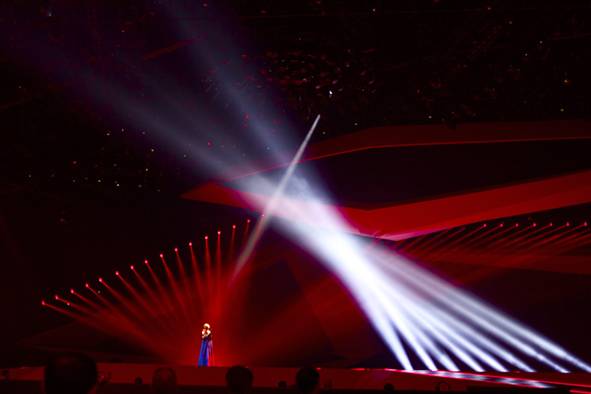
Figure 2: Scene from the 2012 Eurovision Song Contest
The use of beam lights as effect fixtures in performances was successfully implemented in the 2011 Eurovision Song Contest. In 2012, it went a step further. The stage used more space for video, and to accommodate the compressed stage space, beam lights were placed at the edges of LED screens. Nearly one-third of the moving heads were beam-type fixtures, requiring close coordination between lighting and video to avoid obstruction. With 3,000 fixtures packed into such a small area, both control and rigging were challenging, but the lighting and video were equally impressive to ensure each of the 40+ countries had distinct styles and unique lighting changes. The stage design, except for a few scenes, remained largely unchanged, so video and lighting had to differentiate each singer's style. It was said that there were over 4,000 cues (mostly beam change programs) and nearly a hundred presets. In the 7-hour marathon show, these changes were quite rich. In fact, only a small portion of the 3,000 fixtures were frequently captured by TV cameras. From the light plot, there were fewer than 1,000 lights above the stage. The main lights seen in photos were Beam and Sharpy fixtures, with many Beam lights on the three movable concentric rings in the center. Figure 2 shows the contrasting effect of colored Sharpy lights and white 1500 W Beam lights, with the singer's backlight also provided by a 1500 W Beam (in this case, the motor was disconnected, and a staff member manually controlled one 1500 W Beam fixture).
Additionally, many single-point backlights for performers were actually provided by follow spots hidden above the stage or special manual Beam fixtures (many mistakenly thought these were ordinary beam lights).
Table 1: Partial fixture list for the 2012 Eurovision Song Contest
Fixture Model | Quantity |
Clay Paky Alpha Wash 1500 | 78 |
Clay Paky Alpha Shotlight 1500 | 22 |
Clay Paky Alpha Beam 1500 | 157 |
Clay Paky Alpha Spot 1500 | 249 |
Clay Paky Alpha Profile 1500 | 47 |
Clay Paky Sharpy | 114 |
GLP Wash One | 129 |
GLP Impression RZ120 | 30 |
Martin MAC 2000 XB | 436 |
Martin MAC 101 LED Wash | 142 |
A&O Xenon Flower 7000 | 24 |
A&O Xenon Beam 7000 | 37 |
Beam lights can create suitable contrast in both extreme cases of LED screen use and non-use, a feature not common to all moving heads. As shown in Figure 3, the combination of 1500 W Beam fixtures at the top and Sharpy fixtures at the bottom created depth and fullness in the picture (the beams appear bluish due to Sharpy's 7800 K color temperature). When using beam lights without large screens, the beams open up and you don't notice the dark screens, instead creating a deep spatial effect.
In the show, the irregular LED screens provided a strong visual impact, and the unconventional light positions made the stage space look more three-dimensional. Although the overall ceiling height was much lower than in 2011 (30m in 2011 vs. 16m in 2012), the broadcast didn't feel oppressive. With the low ceiling, the 1500 W Beam fixtures' beam width and the Sharpy fixtures in the rear had to work together to create the illusion of depth, and the Beam fixtures' beam shapes looked even more striking and impactful.
The 2013 Eurovision Song Contest brought new changes. The organizers presented a very ornate stage with a gem-patterned curved surface at the rear, using projection extensively at times and dimming to highlight the singers. The set's texture was excellent, so simple wash lighting could enhance the visual feel, and the large curved projection screen accommodated multiple camera angles. In this truly 360° stage, some singers started with their backs to the audience, yet the TV picture always had a perfect view.
The number of fixtures was significantly reduced compared to 2012, partly due to the use of projection. In 2012, there were 157 1500 W Beam fixtures and 114 Sharpy fixtures; this year, 200 Sharpy and 75 SharpyWash fixtures were used. Forty SPOT QWO800 fixtures were used in the area where contestants awaited results. There were 179 spot and profile fixtures on stage.
Table 2: Partial fixture list for the 2013 Eurovision Song Contest
Fixture Model | Quantity |
SHARPY | 200 |
SHARPY WASH | 75 |
GlowUP STRIP 100 | 50 |
ALPHA BEAM 1500 | 50 |
ALPHA PROFILE 1500 | 50 |
ALPHA SPOT HPE1500 | 129 |
ALPHA SPOT QWO800 | 40 |
A.Leda K10 | 58 |
A.Leda K5 | 49 |
.jpg)
Figure 4: Stage design of the 2013 Eurovision Song Contest (the diamond-patterned background at the rear could be used for projection)
.jpg)
Figure 5: Scene from the 2013 Eurovision Song Contest
2.2 London Olympics Opening and Closing Ceremonies
There are many similar examples. The London Olympics opening and closing ceremonies also used 350 Sharpy fixtures, installed in the rear of the audience area, creating a deep beam effect. Because the beams were very thin, even though they crossed the audience's LED screens, they acted more like outlines and did not disrupt the integrity of the LED screens (see Figure 6).
.jpg)
Figure 6: Scene from the London Olympics closing ceremony (Sharpy beams projected from the rear of the second-tier audience to the track, spanning about 60 meters)
.jpg)
Figure 7: Light positions in the rear audience area of the London Bowl (Sharpy fixtures were suspended with extension poles to avoid beams projecting too close to the national flag membrane, preventing heat hazards)
Under the triangular trusses at the edge of the London Bowl, Syncrolite 4 kW searchlights were installed, but they were not used often, possibly because their beam impact was too strong and appeared too abrupt in the picture. In contrast, Sharpy beams, like fine pencil lines in a sketch, were used much more frequently. The 1500 W large fixtures at the bowl's edge were the backbone of the performance lighting.
3 Crossover Moving Heads
To meet diverse performance needs, many crossover moving heads have been introduced, capable of both beam and wash functions. The SharpyWash is one such example. In size, it is identical to the Sharpy, but the spot lens is replaced with a wash lens, and a retractable hood is added, maintaining its compact and lightweight design. This fixture uses a 330 W 15R platinum source, with a beam angle adjustable from 6° to 48°, allowing it to be used in the same area as Sharpy lights for consistent looks, and then separately for other scenes. This crossover design, offering both beam and wash, is well-suited to the increasingly limited space for lighting positions.
Of course, objectively speaking, this is a wash light; it does not have a clear beam or provide many beam shapes, but at its narrowest angle, it can "act as" a softened Sharpy. This fixture is best suited for exposed top light and slightly rear positions, mostly used as top light, and occasionally as backlight. This dual-purpose product offers a good option for many users.
.jpg)
Figure 8: The SharpyWash and Sharpy have the same dimensions.
If you look at the 2013 CCTV Spring Festival Gala, you'll see that the top and backlight positions were surrounded by LED screens, leaving only edges and gaps for lighting. If SharpyWash-type fixtures had been used, they might have alleviated the tight space in those areas.
Conclusion
Today, the entertainment industry has shown great enthusiasm for beam lights in stage lighting, and these fixtures have rewarded users well. As a form of visual art, beams are designed in conjunction with performers, stage design, and video. The real challenge in production is how to highly integrate and control beams with stage performance. Any lighting, video, or stage design should serve the inherent requirements of the performance and the atmosphere. With ever-changing conditions and design needs, will moving heads remain "three pillars" of spot, wash, and beam, or will new fixtures emerge? These are questions worth pondering.

How to Plan a Successful Immersive Themed Exhibition?

How to Customize Event Plans for Clients?

How to Uncover a Unique Brand Story?

Marketing Event Planning and Execution Guide

Fun Christmas Interactive Activities for Your Team

Fireworks Installation Design Guide

How to Better Understand Target Customer Needs for Community Marketing?

A Practical Guide to Offline Community Marketing Events for Real Estate

How to Optimize Roadshow Effectiveness Based on Venue Layout
How to Choose a Non-Traditional Venue for Your Salon Meeting?
TOWIN News