
How to Design a High-End Event Plan Through Pain Points and Highlights
With Double 11 approaching, many event planners have already prepared their promotional plans. It's almost predictable that WeChat will be flooded with merchant promotions and discounts. Everyone wants to capitalize on this trend, but such dense promotional activity will inevitably scatter users' attention. How can you stand out in this sea of promotions?
It's simple: Pain Points + Highlights
Pain Points
The term "user pain points" is a high-frequency buzzword in the industry, and almost all work revolves around it. Why do we do product development and operations? It's to realize self-value by solving users' most urgent needs. Therefore, the key to event planning is to address user pain points. But how do we identify these pain points?
Take Double 11 as an example. Over the years, this shopping frenzy has evolved from Singles' Day into a shopping festival. Merchants' activities generally revolve around discounts and promotions, with 80% of them using the following two promotional models:
- Discount promotions
- Distributing coupons
Both methods are direct price discounts, and the simplest, most brutal way to win is to outspend competitors. If you offer a 30% discount, I'll offer 40%. If your coupon is $50 off $100, mine will be $100 off $100. Everyone is familiar with this price war, but not everyone has the deep pockets of e-commerce giants. Often, even if you have the will to burn money, you lack the capital. Does that mean you're doomed? Absolutely not.
When everyone sells similar products at similar prices and offers similar coupon values, how do you tip the scales in your favor? Micro-innovation is your first weapon to turn the tide. It's crucial to offer what others don't, and to be better at what others have. What does that mean? Let me give two examples:
Example 1: Offer a high-threshold, limited "reward"
On the event day, customers who successfully place an order have a chance to be selected as lucky users and enjoy a lifetime 50% discount (this discount should be set within a break-even range and only for a few people). Words like "lifetime" and "50% off" sound appealing, right? Users often participate with the mindset, "The odds seem low, but what if I win?"
Example 2: Use a membership tier system to enhance customer belonging
Adopt a model where users who shop on the event day are upgraded from B-tier to A-tier members, incentivizing orders. This approach not only saves costs compared to direct price competition but also helps retain existing customers and boost loyalty.
Both methods further address users' desire for more benefits, breaking away from the dead-end of simply issuing coupons and discounts, and are fundamentally different from zero-threshold discount promotions. Moreover, this threshold doesn't cause user resentment; instead, it enhances the appeal of your event.
Highlights
Now let's talk about highlights. Highlights actually encompass pain points to some extent, but they have a broader scope. A common problem with holiday events is that everyone's activity models are similar, lacking distinctiveness and causing aesthetic fatigue. For example, last year WeChat saw a popular "cheer me on" activity model (where users share a link with friends, who click to cheer them on; once a certain number of cheers is reached, the initiator gets a reward—an upgraded version of "like-collecting" gifts).
At first, people found this mini-game novel and participated voluntarily. But after similar activities flooded their feeds, the first reaction became, "Not this again, boring." Unless friends strongly request help, they usually ignore it. So this model gradually faded from view.
But can we make small tweaks to make this cheer model more fun and engaging? For instance, add a "steal oil" button next to the cheer button. If the thief is also a participant, the stolen oil can be added to their own progress bar, helping them reach the finish line faster and get rewards. This transforms the activity from unpaid favor into genuine participation driven by self-interest. Even without that incentive, many users would steal oil out of mischief, further enhancing interactivity.
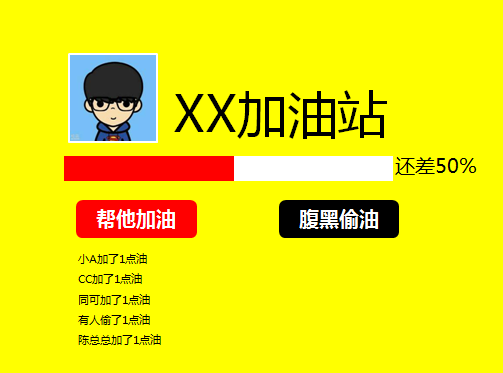
What does this change mean for participants? The main storyline remains "mobilize friends to get rewards," but it subtly becomes a fun test of character. The original model, with only the cheer button as a one-way option, made initiators feel good about themselves. But once the steal button appears, it turns into a free-for-all. Participants experience a subtle psychological shift, especially when revealing the identity of the oil thief, which piques curiosity. Planners can use this channel to satisfy users' desire to uncover the truth through some exchange mechanism, thereby boosting conversion or exposure.


How to Plan a Successful Immersive Themed Exhibition?

How to Customize Event Plans for Clients?

How to Uncover a Unique Brand Story?

A Creative Marketing Extravaganza

Fun Christmas Interactive Activities for Your Team

Fireworks Installation Design Guide

How to Better Understand Target Customer Needs for Community Marketing?

How to Implement Offline Activities in Real Estate Community Marketing?

How to Optimize Your Roadshow Based on Venue Layout?
How to Choose a Non-Traditional Salon Meeting Venue?
TOWIN News