
How to Run a Reliable Event? 8 Common Hurdles in Event Execution!
 What is event operations?
Event operations refers to using events as a form of operation for different products, goods, or projects. It encompasses event planning, event execution, and integrating related products or post-event feedback for the product or project. This forms an overall industry chain, or more precisely, an overall execution chain.
Many event companies have a broader definition of event operations. The event operations I discuss here (mainly offline events) may be relatively narrower and more suitable for practical implementation.
How to run a reliable event? 8 common hurdles in event execution!
In operations work, events are like a birth mother.
1 Why do we run events?
There are mainly four reasons:
First: Attract new potential users
This is the goal of most events: customer acquisition.
Potential users are numerous and relatively clustered, making it easier to categorize them, such as students, homemakers, white-collar workers, singles, travel enthusiasts, or pet lovers.
How to run a reliable event? 8 common hurdles in event execution!
As the old saying goes, birds of a feather flock together. We can rely on events to gather target users of the same category, allowing them to understand the product more directly and deepen the connection between users and the product.
This product includes all clients, whether it's an idea, a commodity, a project, or a new internet product.
Second: Maintain and engage existing users
Our ultimate goal is to create an opportunity for existing users to communicate and interact with each other, and also to foster closer relationships between users and our staff or product-related personnel.
How to run a reliable event? 8 common hurdles in event execution!
There are various forms, arranged according to user levels. A common one is the year-end party, where many companies host annual meetings inviting users to thank them for their support over the past year. At appropriate times, they also organize various themed parties, such as Singles' Day parties on November 11, or World Cup parties during the World Cup. They find opportunities to gather and build relationships.
If there is commercial sponsorship, the forms are even more diverse, such as self-drive tours or group trips to a certain place.
Another form that combines customer acquisition and user maintenance is the sharing session. For example, we might invite influential users to give themed talks, providing them with promotion or sponsorship in return. At the same time, we leverage their influence for customer acquisition. There are many forms.
Third: Quickly improve operational metrics
Event participants are basically target users, and they are users who have some interest in the product.
If the event is sales-oriented, it can increase product sales. If it's for customer acquisition or product iteration, it can improve conversion rates. With excellent promotion, it can easily ride the Pacific wind and soar.
How to run a reliable event? 8 common hurdles in event execution!
That's Lei Jun's saying: if the wind is strong enough, even a pig can fly. Promotion is the wind, and it's very important. I'll introduce this later.
Fourth: Enhance and shape product image
Events are very intuitive and participatory. For new product launches, product updates, or product sales, combined with the attributes of invited guests and good publicity, they can quickly expand the event's influence and enhance the product's image.
How to run a reliable event? 8 common hurdles in event execution!
We often see celebrity endorsements, such as Li Yuchun endorsing Gucci. Endorsers can better align with the product, indirectly shaping its image and increasing its soft power.
2 How to run a reliable event?
Our goal is not to run boring, long-winded events, but to run reliable ones.
Although an event is not simple, it's not very difficult either. We just need to understand two frameworks: the ICE framework and the 3W framework. Making an event that surprises clients and satisfies bosses is not particularly hard.
The ICE framework consists of three parts:
I = Idea, the concept and creativity.
C = Communication, the promotion.
E = Event Execution, the implementation.
The 3W framework, as everyone knows, is: who, when, where – people, time, and place. These are also the three elements of news.
How to run a reliable event? 8 common hurdles in event execution!
1) ICE Framework
Idea: Concept and Creativity
How to run a reliable event? 8 common hurdles in event execution!
Idea is the soul of an event; it's your creativity and thoughts.
A good event is not just about following a process and completing tasks. The key is to focus on and highlight the core theme, such as customer acquisition, brand promotion, user maintenance, sales, or thought leadership.
There must be a clear theme that leaves a deep impression. Otherwise, no matter how lively or luxurious, it will be fleeting, causing a taboo in events: losing focus. Without focus, it's like doing everything but achieving nothing. Having one or two highlights that focus the promotion is enough.
Here are two smaller examples:
How to run a reliable event? 8 common hurdles in event execution!
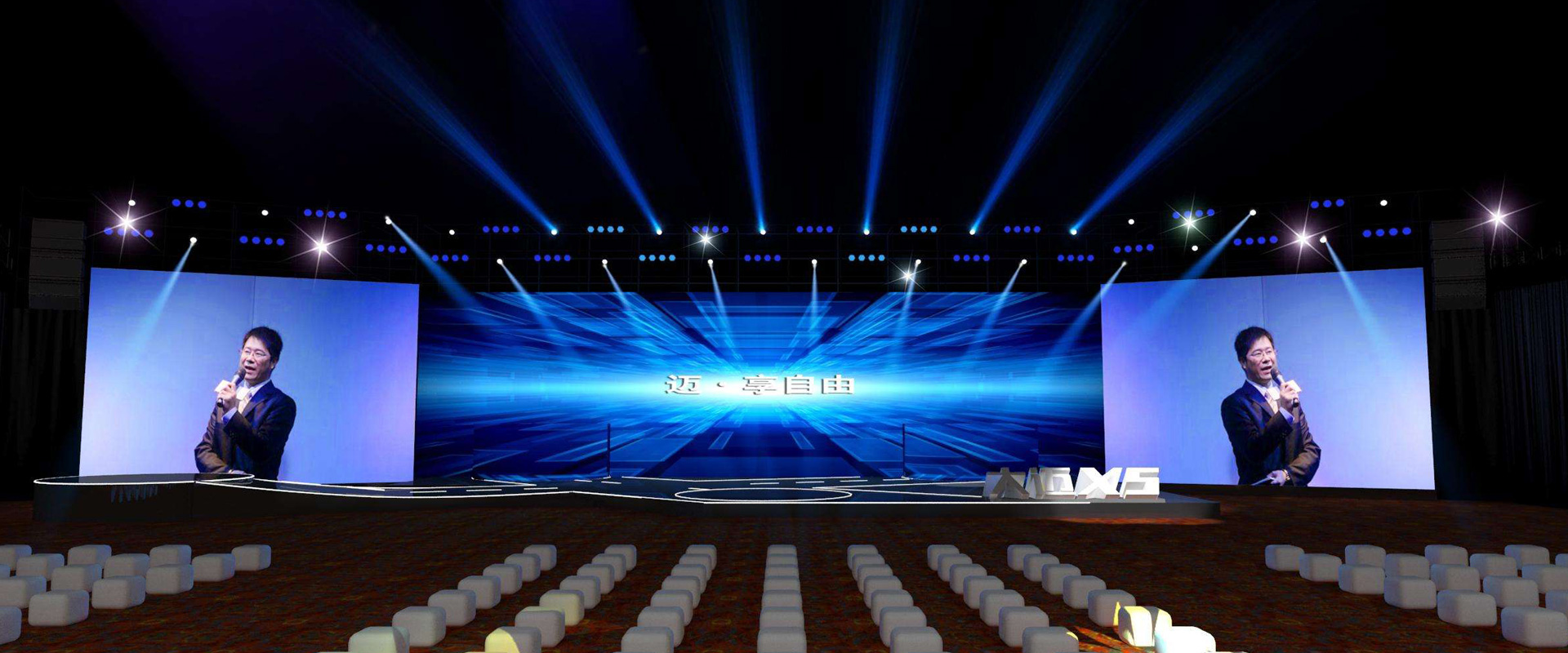
This image shows four product launches with the same format, similar to internet companies like Apple or Xiaomi. Their main creativity lies in product uniqueness and fan or user relationships.
So they don't focus on form; the style is simple and direct, with the emphasis on product feature demonstrations. This aligns with user or fan-centric events, using word-of-mouth to create buzz.
This type of event is very common. Most events or launches that flood your social media feed are of this type: Lei Jun's Xiaomi 5 launch, Apple's annual launches, Luo Zhenyu's year-end speech, Luo Yonghao's stand-up routines, etc. This year, Luo Zhenyu and Luo Yonghao did what was claimed to be the longest interview in Chinese film and TV history, with a 7-hour edited version. You can research and pay attention to it.
How to run a reliable event? 8 common hurdles in event execution!
Fashion-oriented or celebrity-centric events, or events that use celebrities as carriers, usually focus more on the core "fashion theme."
In summary, regardless of the event type, clarifying the goal and defining the theme are the primary tasks.
Once the theme creates the main creativity, don't be greedy. An event only needs one or two memorable highlights. All attendees and subsequent reports usually discuss a single highlight of an event. Too many highlights can cause loss of focus, making it seem like nothing was accomplished.
Communication: Promotion
How to run a reliable event? 8 common hurdles in event execution!
Promotion is the core of an event. We mainly look at these seven points.
Point 1: Thought/Theme Direction
This includes venue decoration pointing in the same direction, such as a specific innovation or style. Styles include retro, extravagant, swimsuit party, World Cup, etc. Details like on-site decor, attire, gifts, and slogans all point in the same direction, leaving a clear impression and aiding subsequent promotion.
Point 2: Guest Speakers' Speeches
Avoid boring script reading or reading from slides. The sharing guests should be relaxed, conveying information that is warm, authentic, vivid, and humorous, with ideas that resonate deeply. I think humor is the most important because it can energize the audience.
Sometimes a humorous joke is better than a lengthy speech. However, it's important to gauge the appropriateness of jokes; for example, jokes like those by certain celebrities might not be suitable.
Point 3: PR and Publicity
This is promotion in the narrow sense. Before inviting media or KOLs, prepare PR articles, event flow guides, introductions to the company or new products, interesting souvenirs, and media transportation fees.
At check-in, you can give these materials to the media. As content publishers, the most important thing in communication is timing. No one wants their product updates leaked early. Nowadays, electronic press kits are common, including photos from the event.
Point 4: Interviews and Displays
During the event, you might use the term "pitch," meaning to strive for something. It's free; it can't be bought.
Securing interviews with important media or self-media is crucial because press releases often aim for quantity, but the content is not focused or particularly compelling, so organic sharing is limited. In contrast, exclusive interviews are in-depth, and the outlets are usually professional self-media or major media with specific audiences and clear targeting. Combining both is best for promotion.
Point 5: Publishing Articles
Publishing articles to the media is to maximize their reach. Therefore, our post-event staff is responsible for following up and reviewing articles.
This is a game of negotiation and emotional intelligence because you need to communicate with the media to achieve comprehensive coverage within the optimal promotion window. Only when the public receives the correct information has the event achieved its purpose.
Point 6: Secondary Promotion
If PR article distribution doesn't fully achieve the goal, then seed information that sparks a topic or public discussion, leading to natural user sharing, is particularly effective.
For example, iPhone and Xiaomi 5 use scarcity marketing; such launches are considered secondary promotion.
Point 7: KPIs
When doing an event, including promotion, you need to conduct a final review with metrics. Events consider Baidu Index, Weibo Index, Weibo topics, WeChat Index, and within the advertising industry, there are unified industry standards for PR and value calculation. You can look these up and provide event feedback.
Event Execution: Implementation
How to run a reliable event? 8 common hurdles in event execution!
Event execution is the guarantee. Execution involves process and details. We need to pay attention to the following:
Point 1: Clear Process
All staff need to understand the process clearly. Internally, the process should be detailed, down to timing, positioning, backup plans, and staff replacement.
Invited users and guests should receive an external agenda so they know what happens and when. If guests are involved in the process, they can prepare in advance.
Point 2: Staff Assignments
In large events, don't assign multiple tasks to the same person. Having one person handle another task on the side is not acceptable because it's easy to miss important segments.
One person per task. If a problem occurs, find the responsible staff member. Each staff member should have contact information for all on-site staff, such as WeChat or phone. We have a rule: always answer calls; never miss any call. Keep your phone in hand and carry a power bank.
Of course, for smaller events, like those with 30-50 people, one person can handle a bit more.
Point 3: Respect Time Nodes
Time is life. This is quite important.
Point 4: Have a Backup Plan
This backup plan applies not only to participants/guests but also to staff, especially for very large events.
Although we strive to minimize the likelihood of emergencies, we need a guarantee. For events with celebrities, we usually assign two people to liaise: one for the agent and one for the celebrity. These two must not be mixed up. Even if they are both present and it's the same matter, communicate with each person thoroughly.
Point 5: Important Rehearsal
This is also for large events. Large events have many segments, some requiring precise timing to the second. Therefore, rehearsals are usually held two to three days in advance, often in the evening.
All staff must participate. If a guest is too important to attend, can their secretary or agent attend? If not, find someone to stand in during the rehearsal. This person should then stay with the important guest until the event is over. So rehearsal is very important.
2) 3W Framework
Where: Venue Selection
How to run a reliable event? 8 common hurdles in event execution!
This is venue selection. Consider several points:
First, capacity: how many people will attend, what kind of venue is needed, and whether the facilities match the budget and event tier.
Cost is also important. More importantly are transportation and amenities: is parking convenient? If users come by taxi, is the venue easy to find?
Amenities include dining and accommodation. Another is backup: events with many attendees often take place at popular locations, which may clash with peak times or events, so book in advance.
For safety, it's recommended to inspect multiple venues and have backup options.
Who: Participants
How to run a reliable event? 8 common hurdles in event execution!
This can be divided into several major categories. One is invited guests, including leaders from the host organization, special guests, media, and opinion leaders (including bloggers, Weibo influencers, and fans).
Then there are staff, which may include internal staff, and for large events, event companies. Often there's a host. For larger events, you might need ushers, external makeup artists, videographers, photographers, etc. If general audience is needed, recruit them in advance.
Each category needs a designated person in charge. Important people need more arrangements. The venue should be considered in advance: you need to prepare dressing rooms, and ensure space for photographers' and videographers' equipment.
If ordering meals for staff (our general rule is to avoid soups because they're inconvenient; that's a detail), arrange in advance.
When: Timing
How to run a reliable event? 8 common hurdles in event execution!
For events, the timeline is the lifeline. The timeline not only records time but also connects the entire project, clarifying content, division of labor, and responsibilities in a detailed schedule.
Industry insiders often have "timeline OCD." Whenever doing an event, you must work backward from the event date, allocate time for each part, assign responsible persons, and hold regular meetings (e.g., daily) to confirm progress.
You should also list the current status and issues that need resolution.
Generally, large events may be planned one to two months in advance; small events one week in advance. One week is the minimum, even for the smallest event, including promotion.
How to run a reliable event? 8 common hurdles in event execution!
Two small examples:
1. LV's fashion shows are particularly elaborate each year. They actually follow the ICE and 3W rules well. Each year, they choose venues like supermarkets, spaceships, or the Louvre, using the location to create a talking point among countless shows, conveying sophistication and attitude. They also invite top celebrities and bloggers, with excellent promotion.
2. Look at 700BIKE's Retro Ride. It's about creating a new lifestyle. The event isn't big; each time only a few dozen people participate, but its promotion on Douban is well done.
700BIKE has done many events, with Retro Ride being the most famous, especially among artistic youth. In the ICE framework, it used 'C' effectively, with excellent secondary promotion among similar users.
It seized on a point other bicycle brands hadn't noticed, and the entire event pointed to retro, a bohemian or artistic lifestyle, from the route, bikes, and dress code, all with clear direction.
After about three years of Retro Ride, they started a Retro Carnival, gradually building it up.
Additionally, consider the example of an internet celebrity conference that effectively used the 3W principle. The timing was at the end of last year when internet celebrity topics were at their peak. For guest selection, they invited controversial figures like Papi Jiang, and in the early stages, the organizers planted this talking point.
Because Papi Jiang is a stark contrast to typical internet celebrities, a breath of fresh air, this explosive point triggered secondary promotion, drawing more attention to the event.
Reliable event execution = Virgo + Scorpio + Taurus. To sum up what makes a reliable execution team: it's Virgo + Scorpio + Taurus.
They have Virgo's meticulousness, Scorpio's decisiveness and assertiveness, and Taurus's stubbornness, persistence, and budget control.
3 8 Common Hurdles in Event Execution
This is also a summary of the previous three parts and a distillation of viewpoints:
No.1: Avoid Heroism
In the early stages, especially for small events like sharing sessions with 10-20 people, you might think you can handle everything alone: you know the guests, can invite 20-30 users, and write copy. But while it seems fine in theory, when you actually do it, you'll find scheduling is troublesome, and working alone can be frustrating.
Doing an event alone is not reliable, even if it's simple. I suggest that if the team can proactively support you, that's great.
No.2: Dictatorship is Necessary
Dictatorship is quite necessary. In many cases, for a sharing event with 30-50 people, there may be disagreements about guest invitations or other aspects. At that point, you need to be decisive, like a Scorpio.
When everyone is debating and no one can decide, if you are responsible, you can make the call.
Democracy has its drawbacks; elites are few. Don't think dictatorship and heroism conflict; they operate in different scopes and levels, each with its own role.
No.3: To-Do List
Creating a to-do list is essential. Beyond event execution, if you're new to the workforce or planning to do events, you should develop the habit of making such lists, sorted by time nodes, to be more efficient.
I often tell my team members to get into the habit of using Excel for everything, recording what you're doing and its progress. This helps us accomplish tasks better, and it's even more necessary in event execution.
No.4: Work Backward from Time Nodes
Both large and small events require backward planning. Large events may need to invite out-of-town guests, book flights and accommodation, possibly two months in advance. Small events, like a weekend sharing session, also need a week of planning.
Even if the event is on the weekend, you should start creating graphics, finalize guests and themes by Monday at the latest, confirm with guests the next day, and promote on the third day from the end. You might need to get big accounts to promote, push in various groups, etc.
Note: You are event-centric. There is backward planning before and after the event, not just before. After the event, you should also have a timeline for feedback and review.
Set goals for one, two, or three days after the event ends, and then wrap up.
No.5: Promotion Accounts for 50%
How to run a reliable event? 8 common hurdles in event execution!
Different types of events correspond to different promotion methods.
First, different event types have different promotion methods. Events are categorized by purpose into two main types: one focuses on users, aiming at attendees; the other focuses on guests, serving the guests, with users coming along to support the guests.
For user-focused events, promotion methods include prizes, high-end event style, interesting formats, and guest influence. For example, pick one or two particularly impressive guests and highlight them. If the venue is upscale, users will be happy.
So for user-focused events, the main promotion directions are prizes, format, interactive guest influence, and venue enhancement.
For guest-focused events, the most important is a sense of ceremony. Create a very impressive graphic for the guest, promote it in the best places, and use all available promotion slots.
The promotion style must be high-end. Use H5 whenever possible; if writing an article, don't use images. Tailor the promotion to the guest's category. For example, if the guest is from the IT circle, try to get IT people to share, because the event will flood social media feeds, and the guest will be pleased.
Creating a Highlight to Stand Out Among Similar Events
You might often encounter similar events. For example, if we have weekly sharing sessions, how do we make them stand out?
In similar events, you need the right promotion channels and highly impactful copywriting titles.
For instance, if we're doing an event titled "Islands You Must Visit in Your Lifetime," changing it to "Boss, I Quit" might be more shareable.
Last week, we did an event called "Youth at 30 Degrees North Latitude," where a travel expert shared his stories of traveling around the world. We later changed the title to "We Don't Advocate Budget Travel, But We Don't Discourage It Either," which had a more relevant talking point.
Back to similar events: many are for brand promotion or expanding market influence. The key is to plan a promotional highlight in the early stages. You can combine current internet trends and language, dig out the most attractive point of the event, and vary the channels and formats to give people a fresh feel, helping you stand out from similar events.
Choosing Promotion Methods
Different event types have different promotion methods. Overall, there are many methods: mass promotion via Weibo, WeChat, big accounts, KOLs; word-of-mouth activities; interactive H5 pages or mini-games. You need to find the right method for your event.
These channels are quite effective. Whether your target users are all categories or a single category, you need to find corresponding channels. The timing of promotion is also crucial: 7-9 AM, 3 PM, and 9 PM-12 AM are peak periods.
If you invite KOLs, student groups, or other groups to publish, these three time slots yield high reach. You can use this as a reference.
No.6: One-to-One Execution Assignments
One person per task. I've suffered from this. Once, due to staff shortage, I assigned two small tasks to the same person, thinking it would be fine, but something went wrong.
So I want to emphasize again: execution assignments must be one person per task. If a problem occurs, that person is responsible; no shirking. If you're short-staffed, find more people, even friends or classmates. Don't assign overlapping tasks.
No.7: Always Have Plan B for Important People/Segments
This is about backups. Always have backups for the most important people and segments. Many things seem fine, but you'll find that emergencies can be overwhelming.
Even if things are 100% certain, keep a Plan B in mind so you can respond quickly if something goes wrong.
Most importantly, don't panic; stay calm and composed.
No.8: Creating a Sacred Moment
This is a small insight I've gained from multiple event operations.
What is creating a sacred moment? It's something we experience together that brings us closer and creates a shared, beautiful memory.
For example, in religion, when an amazing feat is accomplished by a person or group, everyone admires them. That person becomes a saint, and their deeds become sacred. Those who participated in that wave feel very united.
Afterward, you'll notice that this group can chat in a way others can't join. That's how religions form: we become Christians, Muslims, or Buddhists.
Apply this rule to other things: hiking, gatherings, drinking together, car racing, cycling Route 318, attending a Faye Wong concert, or participating in a particularly fun event. These all fall under the cultivation of a sacred moment.
If an event includes something that brings people closer or allows them to share a memory, that's excellent.
This sacred moment ultimately leads to a sense of belonging, which makes the event continuously mentioned later. Then the event becomes very successful.
Source: Everyone is a Product Manager
Author: Tan Piaopiao

How to Plan a Successful Immersive Themed Exhibition?

How to Customize Event Plans for Clients?

How to Uncover a Unique Brand Story?

Marketing Event Planning and Execution Guide

Fun Christmas Interactive Activities for Your Team

Fireworks Installation Design Guide

How to Better Understand Target Customer Needs for Community Marketing?

A Practical Guide to Offline Community Marketing Events for Real Estate

How to Optimize Roadshow Effectiveness Based on Venue Layout
How to Choose a Non-Traditional Venue for Your Salon Meeting?
TOWIN News