

Four Stages of Controlling Event Costs
To outsiders, the cost of running an event is the rewards given out.
To onlookers, the cost is the rewards plus the time and effort spent developing the event.
To operations professionals, the cost of running an event is all the mental and physical effort paid from start to finish.
An event from start to finish is generally divided into four stages.
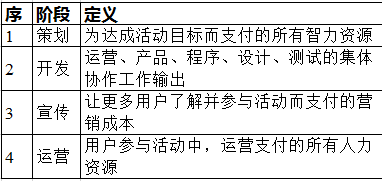
Any event begins with the planning stage and is implemented in the subsequent execution stages (development, promotion, operations). To ensure the original operational goals are not compromised, too much must be paid. Operations is the initiator, while others are collaborators. When problems arise, everyone asks you what to do; when others encounter tasks they don't want to do or execute poorly, operations must step in with human resources to fill the gap; when any issue occurs, operations cleans up the mess.
From start to finish, every stage of an event incurs costs.
Planning Stage: Testing the Accumulated Business Experience of Operations
Whether it's generating revenue or acquiring new users, it's often tied to the company's annual and quarterly plans, which are then broken down into monthly and weekly plans. All planning revolves around goals within a cycle.
Apart from coordinating with other departments for new user acquisition, the operations department daily thinks about how to maximize revenue with the existing user base. In this area, operations is the complete leader, with other departments as support.
For supporting departments, most of the time they see specific execution plans. Behind these execution plans are the responsible person and team locked in meetings, constantly tormenting, overturning, and discarding ideas, finally forming a feasible execution plan. During execution, plans may be adjusted and iterated due to various reasons.
Good event planning is always choosing the most suitable option from countless choices. A driven team writes about five pages of drafts for every one useful page, exchanges information with four different departments to confirm a plan's feasibility, and holds three hours of meetings to finalize the basic framework. A less driven team can pay minimal intellectual resources by simply copying competitors' pace.
This process is where the operations lead, with the team, exhausts all intellectual and physical resources to strive for success.
Previous chapters covered the Theme, Rewards, and Rules sections, all counting as intellectual resources paid during the planning stage. In those three articles, too many questions need to be confirmed.
Suppose we design many good plans, but they may fail due to inadequate execution capabilities, forcing downgrades. Blaming others is pointless; considering execution capabilities and costs at each stage is crucial during planning.
Of course, with accumulated work experience, team growth, and better judgment of collaborators' abilities, the intellectual resources paid during planning can be continuously reduced.
Development Stage: Testing Operations' Collaboration Skills with Development
Different events incur different development costs. Some are simple, like posting an event announcement, such as leveling races, login gift packs, or forum essays. But slightly more complex ones require development, like reservations and gift redemptions, lucky wheels, registrations, sign-ups, and quizzes. These involve page functionality development and database storage. Many events are even built into the game.
Some operations professionals mimic product managers by writing requirement documents and communicating with cross-departmental art, programming, and testing teams. Others delegate to more specialized colleagues. Writing requirement documents that development teams understand is a professional skill. After writing, there are requirement reviews, interaction design, front-end and back-end development, operations launch, and more.
Operations must understand development knowledge. If you design a gameplay excitedly and development says it's difficult or risky, you're forced to redesign, wasting time.
If you can write documents, communication with development is efficient; if not, rules are supplemented during development, and cross-departmental collaboration costs often exceed imagination.
Experienced teams modularize developed features as much as possible for reusability. For development teams, repeatedly building the same thing (professionally called 'reinventing the wheel') means stagnation and low willingness.
Event templates are like a weapon arsenal, accumulated by teams. For example, with lucky draws, random events worldwide fall into a few types. Once templated, you only need to update design images and configuration tables each time. The more templates in the arsenal, the more strategies operations can use.
This cost decreases with improved skills and the construction of event templates.
Promotion Stage: Testing Operations' Promotion Planning Ability
The importance of promotion is not overemphasized; it directly affects participant numbers and reach. This work also has a framework, detailed in the previous Promotion chapter.
Some event promotion tasks, such as revenue and activity events, are completed independently by operations, including building promotion channels, designing copy, and controlling promotion rhythm.
Some event promotions cannot be done independently and require assistance from other departments.
Materials, copy, and ad images are content production, mainly output by designers.
Content distribution channels, exposure frequency, and marketing resource reservations are execution-level tasks, coordinated by the market and business departments.
For mega-events, the company often assigns market, business, brand, and PR leads to support the operations team. Small events are handled directly by operations.
Between mega and small events, there's a middle ground where help is often needed, testing your organizational skills and emotional intelligence. Poor organization leads to chaos and repeated torment of others; even high EQ won't help. Many steps require others' help—can you make them work overtime when they could leave on time?
This is a preview of the upcoming Execution chapter on how to effectively mobilize public human resources' enthusiasm.
This cost decreases as workflows are continuously improved.
Operations Stage: Testing Operations' Maintenance Costs
1. Operational costs due to rule design
For example, essay contests or beauty pageants, the process of ranking results consumes our energy. Some competitive or tournament events are held in rounds; after each round, operations must verify results, write battle reports, and announce advancing players.
A seemingly trivial question: Should events end at 0:00 or 24:00, or start at 12:00 and end at 12:00 the next day? Which do we use?
My suggestion: For auto-settled rewards, it doesn't matter. If the event requires human resources during operations, I recommend ending at noon. Similarly, avoid ending at 18:00 on Friday before the weekend.
Some events require long settlement times. You need data colleagues to extract data, then verify results with you, then announce winners and settle rewards. If you design a 24:00 end, they'll work overtime with you until 24:00 and then busy until 1:00 AM. They'll curse you internally—why should they work overtime? On the other hand, we need to serve users by announcing results promptly. If it ends at 24:00, you'd announce at midnight, and if settlement issues arise, adjustments are troublesome. No one wants to come out at night to clean up your mess.
Similarly, for new events that haven't been run before or have unclear processes, avoid launching before long holidays. If unstable, issues during the holiday will ruin the holiday for the entire coordination team. (Here, 3000 words of bitter lessons are omitted...)
2. Reward distribution costs due to settlement methods
Rewards auto-settled in-game are not included. For page events outside the game, some rewards are in the form of CD-KEYs. For forum events, you send private messages; for page events, you collect phone numbers and ask platform colleagues to send CD-KEYs via SMS.
Some events include physical and cash rewards. For physical rewards, during address collection, you often get weird addresses, and operations must verify each one (or ask customer service to assist), otherwise mailing is impossible.
Cash rewards are not as simple as WeChat or Alipay transfers. Companies usually go through financial remittance and labor fee processes, with internal approvals at each level. You need to collect bank card details and request faxed ID copies—troublesome.
I once ran a large competitive event that gave away 100 iPad mini 2s. The winners were wealthy users. The address verification process is not mentioned. At that time, a new model was about to launch, and the procurement process for 100 units was completed. Three wealthy users commented on the CEO's Weibo, requesting specific colors and offering to pay extra to upgrade memory (16GB to 32GB). The CEO promised each to satisfy them, disrupting the procurement process. From finance to suppliers, everything had to be redone. Ultimately, for those three users, the other 97 users received their devices a full 1.5 months later than expected.
Looking back, this was very foolish (e.g., we could have purchased the three specified units separately, but procurement rules and policies at the time didn't allow it; the finance department handled this, and operations couldn't change policies). There were many ways to avoid or solve this, but in reality, due to information asymmetry across departments, promises had to be kept, and processes were irreversible, leading to this outcome. This is my personal experience, memorable and helpless.
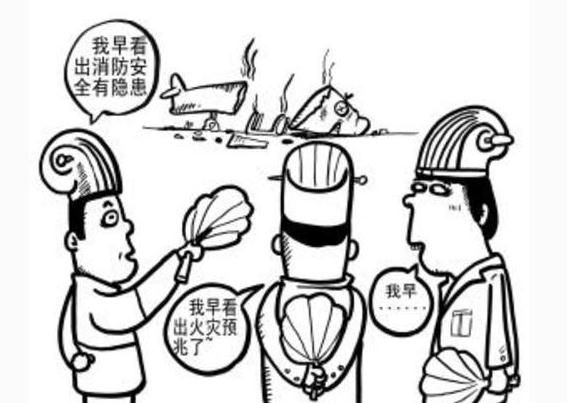
In hindsight, past actions often seem foolish, but at the time, various factors intertwined. We can only be wise after the event.
All maintenance costs depend on prior planning. When designing events, leaving enough time makes these manageable. The worst is unexpected costs.
3. Maintenance costs due to unexpected situations
Despite careful checks and testing, events inevitably encounter surprises. Whether caused by our own mistakes or other reasons, the event lead must handle the aftermath.
No matter how well-written your rules, some users will have questions. This is normal. If feedback exceeds a certain volume, you must continuously supplement and iterate explanations. Some users don't read the rules and ask questions when they encounter issues. In such cases, either operations acts as customer service or you prepare an FAQ and train customer service to assist. These tasks consume time and energy.
If developers are incompetent, bugs occur, requiring temporary fixes. Some issues aren't bugs, such as slow access, browser incompatibility, resolution issues, lack of load balancing, and inability to handle concurrent pressure—a series of experience problems...
Failure to control any stage leads to uncontrollable risks. The biggest cost is never monetary but the human resources lost to mistakes and the opportunity cost of time wasted fixing them.
Unexpected events are unexpected because they're unpredictable. To avoid them, rely on experience. I'll detail this in the upcoming Risk chapter.
The above content relates to various event costs, aiming to help build cost awareness. Finally, let's discuss methodologies for improving efficiency and reducing costs in organizational operations.
Everyone Wants to Improve Efficiency and Reduce Costs
Our daily time is fragmented by various tasks: brainstorming in meetings, writing documents at desks, communication and collaboration in various settings...
We all know that discussing quality without considering cost is irresponsible.
Almost every manager emphasizes efficiency. If they're verbally diligent but lazy in practice, it's just wishful thinking. Everyone has the subjective will to pursue efficiency; the question is how. Merely emphasizing guiding principles doesn't help actual business operations.
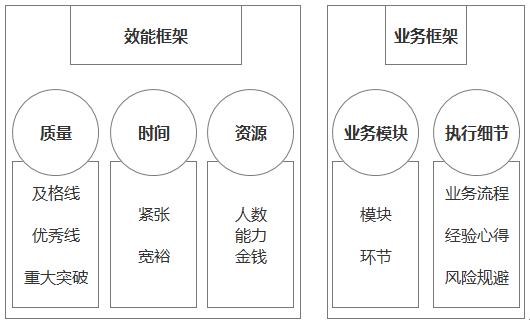
Every professional with years of experience should have two frameworks in mind: an efficiency framework and a business framework.
The efficiency framework refers to: each time you do something, how many company resources are consumed? How much time is spent? What quality results are achieved? You should always have a sense of these.
In the event context, quality (event KPIs) is fixed. The only way to reduce costs is to improve efficiency—delivering better results with fewer human resources and less time. Managers emphasizing efficiency should start from these three angles.
The business framework, in simple terms, is the department's business operation manual.
Each department is responsible for various business modules; each module can be broken down into stages (like this article); each stage can be further broken down into execution details. This decomposition process is building the business framework.
When writing the department manual, it's not just about telling people how to do things, but also providing past experience, common pitfalls, and solutions (most people lack the willingness or ability to do this). This is difficult, but achieving it is rewarding. It's also a necessary condition for a manager to become a hands-off leader, and it's your core competitive advantage.
The efficiency and business frameworks are mutually causal and iterative. Inexperienced people lack a business framework but can use the efficiency framework to think about problems. With accumulated experience, they gradually build a business framework. Those with a business framework, after repeated validation with the efficiency framework, approach everything with confidence.
- The more refined the business framework, the more efficiently the business operates.
- The more refined the business framework, the better we can measure the resources needed to achieve goals.
- The more refined the business framework, the clearer we can see whether we and our departments are operating efficiently.
Returning to the theme of cost, refining the business framework as much as possible is the only solution to pursuing efficiency and reducing costs.

How to Plan a Successful Immersive Themed Exhibition?

How to Customize Event Plans for Clients?

How to Uncover a Unique Brand Story?

Marketing Event Planning and Execution Guide

Fun Christmas Interactive Activities for Your Team

Fireworks Installation Design Guide

How to Better Understand Target Customer Needs for Community Marketing?

A Practical Guide to Offline Community Marketing Events for Real Estate

How to Optimize Roadshow Effectiveness Based on Venue Layout
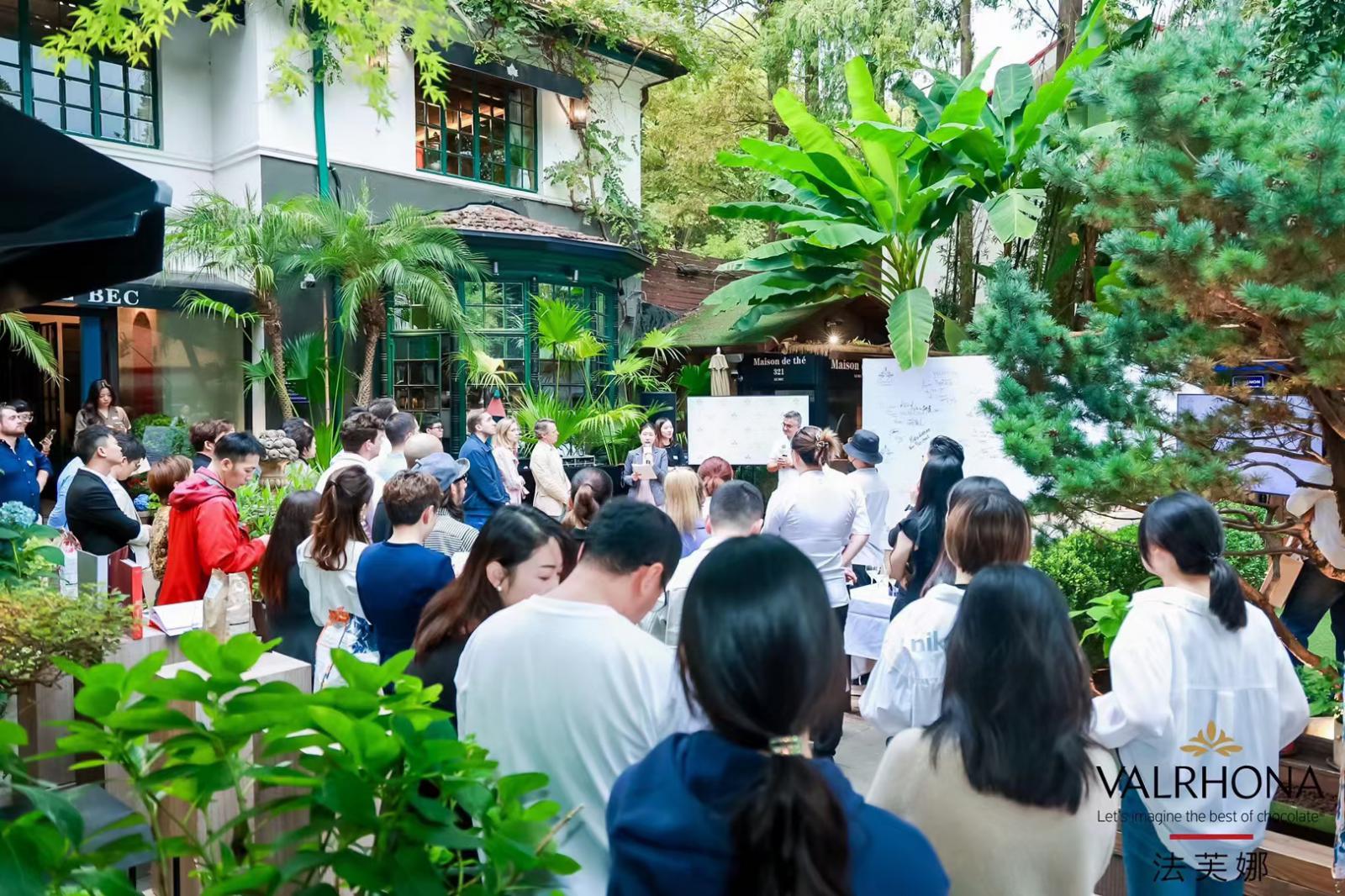
How to Choose a Non-Traditional Venue for Your Salon Meeting?
TOWIN News