
Event Planning: How to Successfully Host a Product Launch from Scratch
It's mid-year again, and the second half of the year is often when major internet companies rush to hold product launches. Various launches and industry summits are overwhelming. Many times, we are just attendees witnessing the brilliance of big names. But what if one day our boss asks us to plan a launch ourselves? What should we do?
This year, I was fully responsible for or indirectly assisted in three product launches. When I was first asked by my boss to plan and execute a launch with over 500 attendees, I was also completely at a loss. Fortunately, after nearly two months of overtime work with my colleagues, we finally brought the launch to a successful conclusion. Looking back now, I think if you want to successfully host a product launch, I have the following experience to share with you.
For organizing a launch, I have summarized a method: it requires three cores and two lines:
The three cores refer to the launch theme, the agenda on the day of the launch, and the launch guests. These three cores directly determine the quality and popularity of the launch, so they are very important.
The two lines refer to the launch promotion line and the launch resource implementation line. These two lines directly affect whether a launch can be held successfully and smoothly. If you have achieved the above, then congratulations, you are not far from successfully hosting a launch.
Personally, I think the influence of a launch depends on the three core elements: the theme, the agenda on the day, and the guests attending.
1. Launch Theme
The Significance of the Launch Theme
The theme of a launch is like the title of an article, directly determining whether people are willing to learn about the launch. Moreover, the determination of the theme basically sets the overall promotional direction of the launch and the information to be conveyed to the target audience. The theme directly defines which group of people we hope to attend. For example, the UC launch I was responsible for, "Your Creation Deserves More," conveyed a clear intention: the core purpose of our launch was to enhance the creative value of self-media professionals, and the core audience was self-media professionals. Therefore, this theme basically excluded people from other industries.
Common Types of Product Launches
To determine the theme of a launch, we usually need to understand the purpose of the launch. According to different purposes, we can more accurately determine the connotation of the launch, thereby conveying more focused information to the outside world.
Common launches, according to their different purposes, are generally divided into four types: new product launches, strategic upgrade launches, partnership launches, and industry launches.
The first type, new product launches, generally refers to launches held by a company to promote its new products, such as Apple's new product launches every autumn.
The second type, strategic upgrade launches, generally refers to launches where a company announces major upgrades in product direction or brand image. For example, UC's strategic upgrade launch "New UC, Dancing with Media" announced that "UC Browser" was officially upgraded to "UC," fully upgrading to a "big data new media platform."
The third type, partnership launches, generally refers to launches held when two companies cooperate or jointly invest to establish a new company. For example, the launch held by the new joint venture of 360 and Coolpad falls into this category.
The fourth type, industry launches, are usually held to promote industry exchange, such as the GMIC Mobile Internet Conference.
2. Launch Agenda
Components of the Launch Agenda
Whether the launch agenda is interesting and reasonable is an important factor in attracting attendees to register and keeping the audience until the end.
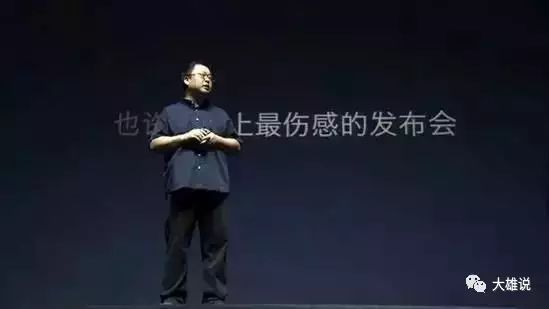
For a launch, common agenda items may include: opening remarks by leaders, core product presentations, guest sharing, launch ceremonies, panel discussions, and lucky draws. Depending on the scale, resource advantages, and focus, a launch can consist of one or several of these items. For example, at the previous Smartisan phone launch, it was basically Mr. Luo's stand-up comedy performance, talking from start to finish for two or three hours, introducing the new phone entirely. Because of Mr. Luo's unique charisma, the audience still enjoyed the launch. Some launches, due to lack of highlights, may see half the venue empty before the event is halfway through.
Notes on Setting the Launch Agenda
When setting the launch agenda, the following three points need attention:
First, the most important consideration is how to cleverly introduce your product. For example, when introducing a new phone, Mr. Luo Yonghao played the sentiment card, while Xiaomi played the hardware specifications card. Both used the launch to promote the highlight of the event in the most suitable way for themselves.
Second, consider the highlights of the launch. The highlight is the most attractive point of the launch. For example, the introduction of the iPhone 7 at Apple's new product launch, or the announcement of an important plan, or a creative segment of the launch.
Third, the launch agenda should not be too long, and there should be a focus. The overall duration of the launch should ideally be controlled within 4 hours; otherwise, if it is too long, the audience's attention will not be concentrated, and they may leave. Moreover, if it is too long, the organizer needs to consider whether to provide meals for attendees, increasing the complexity and cost of the launch. For important segments, such as introducing new products, more time can be allocated; for less important segments, such as opening speeches, 10-15 minutes is sufficient.
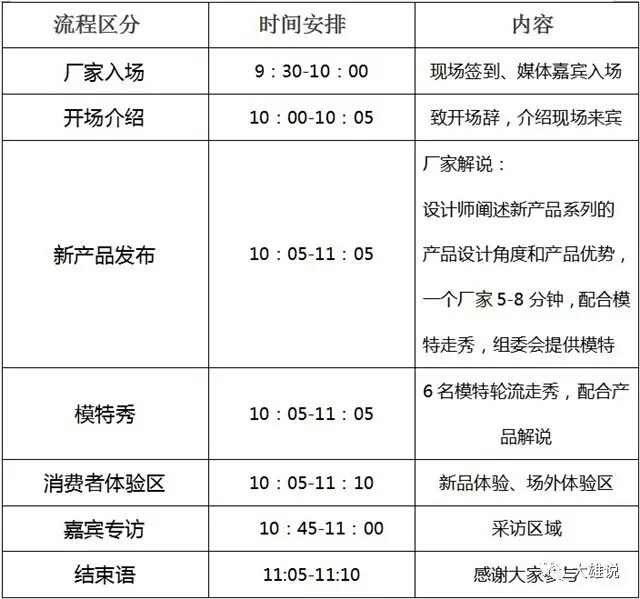
Finally, after determining the agenda, create a launch schedule. Specify what time each segment starts and ends. This schedule can be used for time control on the day and to inform attendees of the day's activities.
3. Launch Guests
The importance of launch guests is self-evident. If a launch has sufficiently heavyweight big names attending, it can definitely enhance the event. Many attendees often come specifically for the guests' sharing.
Common launch guests can be divided into two types: industry leaders and celebrities. Industry leaders are typically the most influential figures in the industry; their sharing often elevates the level and value of the launch. The presence of celebrities greatly increases the popularity of the launch. However, considering cost and effect, inviting industry leaders often has a more focused impact and better results.
When selecting guests, first, pay attention to whether the guest's image and connotation match the overall theme of the launch, achieving a complementary effect. For example, vivo phones, which target young and fashionable consumers, invited Li Yifeng, a young idol, as a guest, which was a good match. However, for Xiaomi Note 2, choosing Tony Leung as a guest, I personally don't understand the strong connection between the two. Second, invite several backup guests. Because a launch often has a long preparation time, it is possible that some guests may not be able to attend due to scheduling conflicts. Therefore, it is essential to have backup plans for guests. In critical times, the second lead can also play the leading role.

How to Plan a Successful Immersive Themed Exhibition?

How to Customize Event Plans for Clients?

How to Uncover a Unique Brand Story?

Marketing Event Planning and Execution Guide

Fun Christmas Interactive Activities for Your Team

Fireworks Installation Design Guide

How to Better Understand Target Customer Needs for Community Marketing?

A Practical Guide to Offline Community Marketing Events for Real Estate

How to Optimize Roadshow Effectiveness Based on Venue Layout

How to Choose a Non-Traditional Venue for Your Salon Meeting?
TOWIN News